The Ultimate List of SMS Abbreviations for Text Marketing
Share on:


Are you thinking about digging into how text lingo could change your text marketing strategies? You’re in the right place – this comprehensive guide on SMS abbreviations will help you improve your text message communication. The abbreviated, exciting, and relatable text could potentially improve your text interactions.
Nobody likes super long text messages, right? And from a business, it’s even worse, as it can look spammy. Short texts get opened, and they get more responses.
Ready to get started on this process? Let’s talk about some of these!
Table of Contents
1. Why Are SMS Abbreviations Useful?
5. Miscellaneous Abbreviations
6. Tips When Using Text Abbreviations
7. Improve Your Local Marketing
Why Are SMS Abbreviations Useful?
First, SMS abbreviations help you save space and increase efficiency.
Text marketing is tough; we’re often asked to fit everything into a tiny 160-character limit. Here’s a silver lining: abbreviations fill this part wonderfully, keeping us from sending long, multiple messages. So, if bombarding your customers with endless texts isn’t appealing to you, think about abbreviations.
Abbreviations serve as a useful tool to reduce costs. Let’s think about it: each text message costs your customers. So, a wordy text could multiply that cost. Here come abbreviations to the rescue; they make messages shorter – cutting down on total word count – and thus trimming costs.
Think about how abbreviations contribute a personal touch to your message. They have a friendly message and mimic the type of text messages customers send daily. What does this mean for you? It potentially creates trust and creates better user interaction.
Looking to stimulate user engagement? Your solution may be abbreviations; they excel at creating two-way text conversations. Abbreviations use well-known, brief words that can create an authentic connection with your customers. If fortifying the bond with your target audience is your goal, I highly recommend considering abbreviations for your next venture.
Beware – context matters! Different age groups prefer different abbreviations, meaning it’s important to adapt your style to meet your target audience’s preferences.
Don’t underestimate the versatility of abbreviations – that would be a mistake. Even though changing communication styles, text abbreviations always manage to stay relevant. They seamlessly integrate with fresh communication styles and innovations – even when character limits aren’t a concern. Also, they’re a noticeable sign of our ever-evolving language!
Let’s start to cover some individual examples and what they mean;
General Text Abbreviations
I think the main reason we have these useful general abbreviations is to speed up texting and make it more practical.
Do these abbreviations seem too formal? Don’t they help to prevent any confusion? Taking this perspective, you might appreciate how situations – like texting on the run or in a meeting – make them especially valuable. For example, a quick BRB (be right back) signals a brief conversation halt, while FYI (for your info) smoothly introduces extra relevant info.
The meaning of DIY has become a lot broader, hasn’t it? It’s not restricted to just texts – no, it also stands for any do-it-yourself tasks or hobbies you might enjoy. In the same way, TMI (too much info) has found a new job – it suggests someone has shared too much information.
Have you noticed ASAP and BTW in ads? I suspect their clear, simple messages have helped them become marketing MVPs. They quickly give you a sense of urgency (ASAP) or added information (BTW) without losing the main point: proof of their marketing value.
Here’s a handful of examples in a short list:
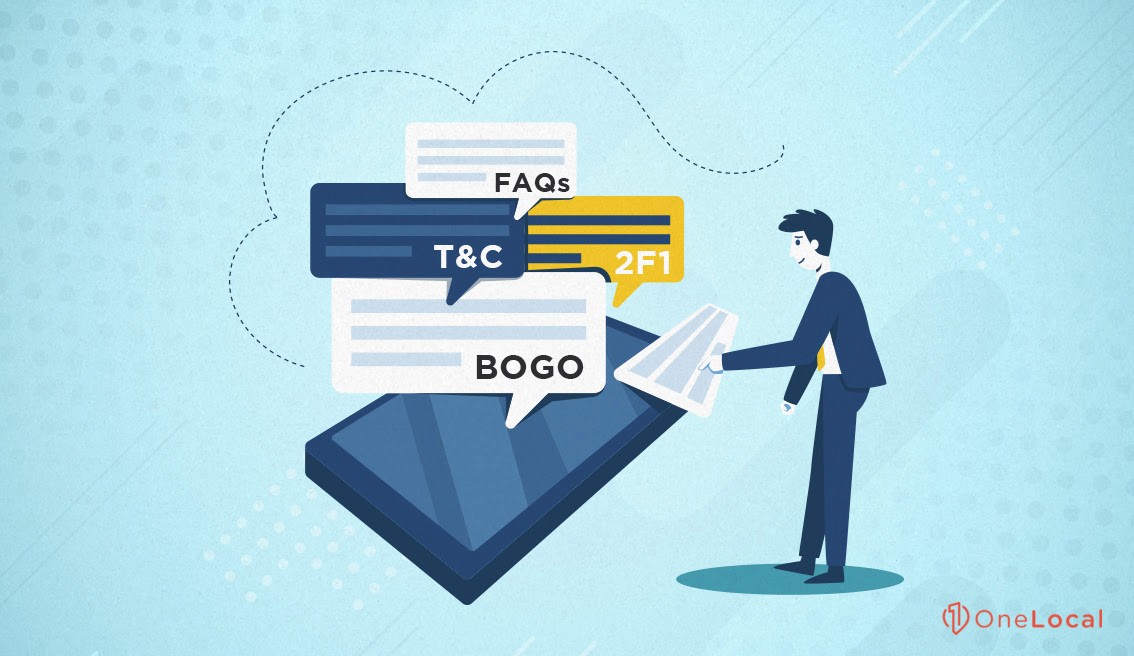
BOGO – Buy One, Get One (often followed by “free” or a percentage off)
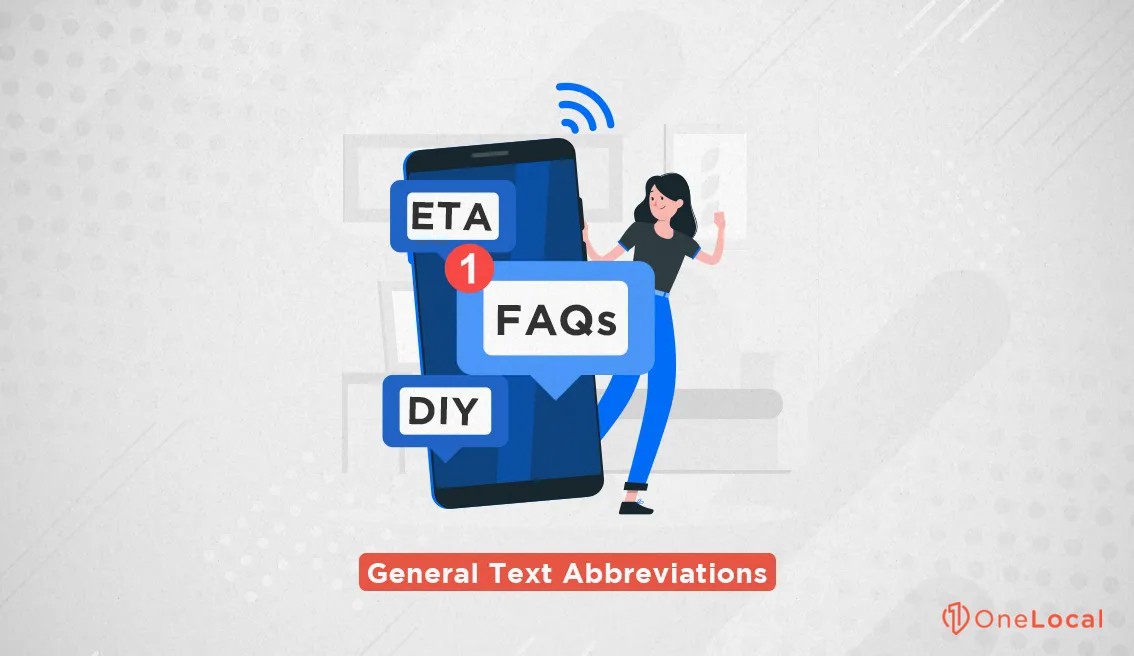
FAQs – Frequently Asked Questions
FCFS – First Come, First Served
T&C – Terms and Conditions
ETA – Estimated Time of Arrival
RSVP – Répondez S’il Vous Plaît (Please Reply)
VIP – Very Important Person
PROMO – Promotion
MSRP – Manufacturer’s Suggested Retail Price
NWT – New With Tags (often used in retail)
OBO – Or Best Offer (used in sales and auctions)
% OFF – Percentage Off, indicating a discount
2F1 – Two For One
24/7 – 24 Hours a Day, 7 Days a Week
ASAP – As Soon As Possible
DIY – Do It Yourself
EOD – End Of Day (sometimes used in customer service to indicate when something will be done)
F.S. – Free Shipping
INCL – Like
LTD – Limited (often used to describe a limited offer or edition)
Look at it this way – you want to speed up talking without changing the main point. So, choosing the right abbreviation helps keep any chat on track.
Business Abbreviations
Boosting your business communication skills does a lot – it’s about improving simple message sharing and social media understanding. The big benefits? Pro-know-how gets a solid boost. Ever heard of T&C (Terms and Conditions), ASAP (As Soon As Possible), or EOSS (End Of Season Sale)? These aren’t just confusing letters – they’re important time-saving tools we use to clean up our pro conversations.
Take T&C, for example; it allows for quick, simple talks instead of long-winded explanations. ASAP and EOSS do pretty much the same thing – they make sure your message gets out there quickly!
The business world loves acronyms, especially in marketing and written communication. The more you, the more your performance might see an uptick – it’s all tied to your sales, too! Ever heard of CPC (Cost Per Click) or C.R. (Conversion Rate)? These important numbers offer an inside look at how much each website click costs and how many site visitors achieve their end goal.
The acronym SMB gets thrown around a lot, too – it means Small/Medium Business. Other common terms you might run into include TOS (Terms of Service) and SCN (Short Code Number). They pop up all the time in marketing and legal talks.
Let’s chat about the term 5G – it’s more than a buzzword. It’s the fifth-generation mobile network and a real game changer in mobile marketing. What about TCPA, you might ask? It stands for the Telephone Consumer Protection Act; it’s a regulation that keeps consumers safe from pesky calls and one that every marketer should be familiar with.

Here’s a handful of additional examples in a short list:
Appt – Appointment
ASAP – As Soon As Possible
B2B – Business to Business
B2C – Business to Consumer
COB – Close Of Business
EOD – End Of Day
ETA – Estimated Time of Arrival
FYI – For Your Information
KPI – Important Performance Indicator
MoM – Month-over-Month
NDA – Non-Disclosure Agreement
OOO – Out Of Office
POC – Point Of Contact
QoQ – Quarter-over-Quarter
RFP – Request For Proposal
ROI – Return On Investment
SME – Subject Matter Expert
TBD – To Be Decided
WFH – Work From Home
YTD – Year To Date
So, here’s a hard truth: Getting to grips with this gibberish – sorry, abbreviation-heavy lingo – is a must, not a maybe. They help you be efficient, effective, and quick – the hat trick we all shoot for in our work chats. These little bits of lingo pack a punch; they can boost your company’s communication!
Social Media Abbreviations
Let’s start with D.M. Puzzling, maybe? It’s not! D.M. is merely shorthand for Direct Message. With this feature on Instagram or Twitter, you can have private chats – pretty cool, right? An insider secret: it’s your perfect chance to forge strong relationships with either customers or influencers.
Let’s dig into PM, standing for Private Message, primarily seen on Facebook. I bet you’ve seen other abbreviations like F.B. for Facebook, I.G. for Instagram, LI for LinkedIn, and Y.T. for YouTube, don’t you? These bite-sized acronyms come in useful; they’re almost indispensable, especially when you’re battling character limits!
You’ll soon trip over SMP, which stands for Social Media Platform. Unknowingly, you’ve been using them all this time! It merely encompasses all social media networks. And here’s the kicker: each platform has special features that, in my view, are valuable networking tools waiting to be discovered. Think about R.T., short for Retweet, a common term on Twitter; it’s a simple method for businesses to improve their marketing reach and customer interaction via shared messages.
Eager to boost interaction? Sprinkle in useful shorthand like QOTD for Quote of the Day and OOTD for Outfit of the Day. From my experience, these tiny gems consistently help shape a brand’s personality. On that note, Remember TBT (Throwback Thursday) and FBF ( you have it right, Flashback Friday); weekly snapshots of the past are what these hashtags kick up, really getting your followers invested and engaged.
More up my sleeve: AMA (Ask Me Anything) and ELI5 (Explain Like I’m 5) are perfect conversation starters that let your brand appear transparent. Have a few product queries or service-related questions to handle? These phrases are your favorite. And remember MFW (My Face When) – a lively way to share emotions that resonate with your customers. And HMU (Hit Me Up) is a laid-back, enticing call to action to get followers eager to converse.
Here’s a handful of additional examples in a short list:
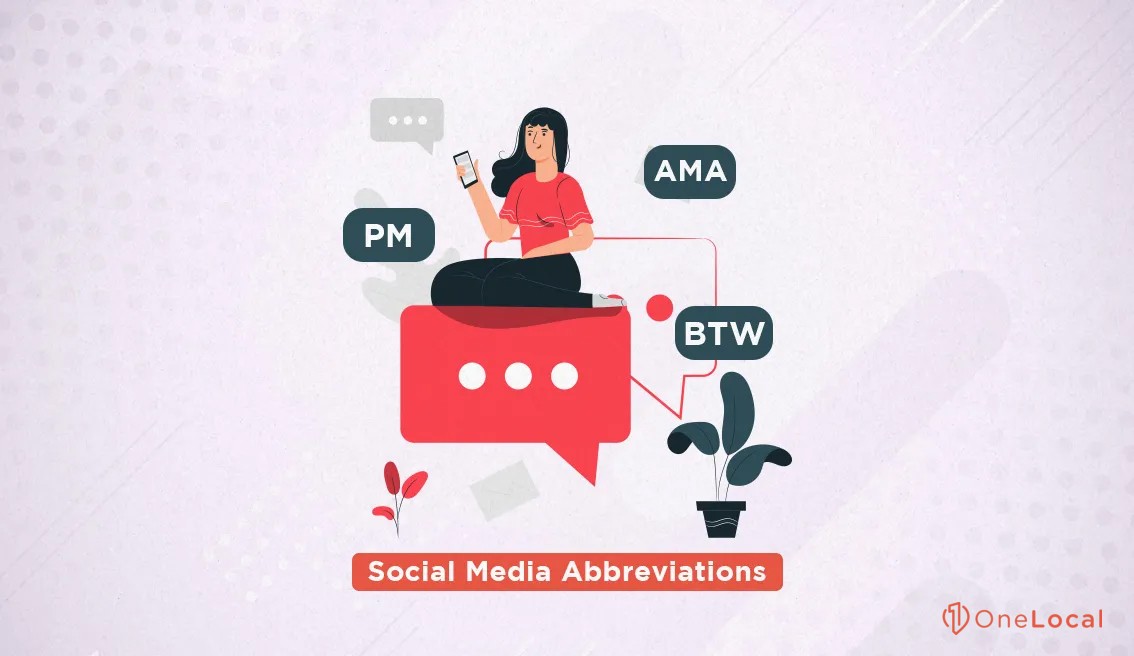
AMA – Ask Me Anything
ELI5 – Explain Like I’m 5 (years old)
QOTD – Quote of the Day
D.M. – Direct Message
PM – Private Message
TBT – Throwback Thursday
FOMO – Fear Of Missing Out
YOLO – You Only Live Once
NSFW – Not Safe For Work
ICYMI – In Case You Missed It
TL;DR – Too Long; Didn’t Read
BRB – Be Right Back
BTW – By The Way
IDK – I Don’t Know
IMO/IMHO – In My Opinion/In My Simple Opinion
IRL – In Real Life
SMH – Shaking My Head
TBH – To Be Honest
BFF – Best Friends Forever
ROFL – Rolling On the Floor, Laughing
These are more casual and focused on humor, pop culture, and so on, so they are only applicable to some types of businesses.
Miscellaneous Abbreviations
Some abbreviations don’t fit well into these categories, but they’re still helpful to have.
I mentioned some of these already, but this is a much larger list of 50 miscellaneous abbreviations for your reference:
AFAIK – As Far As I Know
BFF – Best Friends Forever
DIY – Do It Yourself
ETA – Estimated Time of Arrival
FIFO – First In, First Out
LIFO – Last In, First Out
FYI – For Your Information
IMO/IMHO – In My Opinion/In My Simple Opinion
IIRC – If I Recall Correctly
LOL – Laugh Out Loud
OMG – Oh My God
P.S. – Postscript
RSVP – Répondez S’il Vous Plaît
SOS – Save Our Souls/Ship
TGIF – Thank God It’s Friday
TIA – Thanks In Advance
TTYL – Talk To You Later
WIP – Work In Progress
WYSIWYG – What You See Is What You Get
YOLO – You Only Live Once
BRB – Be Right Back
BTW – By The Way
FAQ – Frequently Asked Questions
IDK – I Don’t Know
IOW – In Other Words
ITT – In This Thread
J.K. – Just Kidding
LMAO – Laughing My Ass Off
LMK – Let Me Know
MIA – Missing In Action
N/A – Not Available
NSFL – Not Safe For Life
NSFW – Not Safe For Work
OOTD – Outfit Of The Day
O.P. – Original Poster/Original Post
ROFL – Rolling On the Floor, Laughing
ROFLMAO – Rolling On the Floor Laughing My Ass Off
SMH – Shaking My Head
SO – Important Other
TBA – To Be Announced
TBC – To Be Confirmed
TBD – To Be Decided
TL;DR – Too Long; Didn’t Read
TMI – Too Much Information
TTFN – Ta-Ta For Now
TTYS – Talk To You Soon
UFO – Unidentified Flying Object
URL – Uniform Resource Locator
VIP – Very Important Person
YOYO – You’re On Your Own
There are many others that I’m sure I’m missing; it’s impossible to catch them all!
Tips When Using Text Abbreviations
Be mindful of the use of text abbreviations when communicating in business; your audience’s understanding of such language is important. Younger people might get phrases like “np” (no problem), but will it jive with your older clients?
Let’s keep it simple – cramming an email with acronyms can fog up the main point instead of making it clear. Is a picture worth a thousand words in this case? Choose visuals over lingo if they explain your point better.
You might think trendy abbreviations are cool, but are they really? Sometimes – but not always. These trendy terms could be here today, gone tomorrow. Stick around with standard abbreviations that everyone gets – it’s safer for clear communication.
Even in simplicity, professionalism should never take a backseat; inappropriate expressions are unwelcome in pro dialogue. Always examine each message carefully before hitting send; make sure it represents your brand values and fits audiences of all ages.
Ever notice how the tiniest details make the biggest difference? A small change in spelling can spin an acronym’s meaning right on its head, causing bafflement or worse – misinformation. Always shoot for a crisp, easy-to-understand message; confusion has no place here.
If you do need to use an abbreviation, make sure you spell it out in full at the start, especially in complex situations. Otherwise, you might have a very confused reader on your hands!
Say you’ve introduced an abbreviation; it is difficult to keep it consistent all the way. Switching gears mid-conversation might just end up befuddling your counterpart.
Don’t use too many or get abbreviation-happy; a flood of abbreviations could make your message unreadable and could make you look less pro.
In formal situations – like official documents, legal contracts, or serious emails – give abbreviations a wide berth: full terms are mandatory.
Guesswork has no place in communication. I strongly suggest that thinking everyone knows your acronyms is a risky business that could end in frustration.
When it comes to sensitive issues – especially those involving legal or financial matters – it’s full terms and crystal-clear language only. No one should agree to anything they don’t fully agree with, right?
In my opinion, if you stick to these pointers, you’ll be able to fine-tune the way you use text abbreviations in your communications. This sweet spot between convenience and professionalism will make sure nothing gets lost in translation!
Improve Your Local Marketing
SMS abbreviations are useful for more than saving time; they can also make your marketing campaigns cost-effective and unique. But, it’s in striking the right balance between using abbreviations and keeping the message clear. Context and relevance? They’re pretty darn important!
Technology just keeps changing, and so does the way we use SMS abbreviations; that’s life these days. To keep up, you need to be open and always looking for something new – finding fresh abbreviations and winning ways to work them into your text marketing.

I’m convinced that using SMS abbreviations strategically can step up your text marketing game. But just remember – a deep understanding of your audience, medium, and message is important to the success of your campaign. Getting to grips with how SMS abbreviations fit into your local marketing strategy? It’s only the start.
Why not give OneLocal a go if you want a catch-all local marketing strategy? With our offerings – LocalSite, LocalReviews, LocalSEO, and LocalAds – we’re committed to boosting your small business’s growth and visibility. Want to look into what we can do? Find out how we can level up your local marketing by booking a free demo with us. Navigate the always-changing world of local marketing with OneLocal!

Related Article
Related Article