The Local Marketing Calendar Every Home Service Business Should Be Running
Share on:


Most local service businesses market the same way they run into a burst pipe: reactively. Bookings slow down, so someone remembers to boost a Facebook post. A slow Tuesday shows up, so a discount goes out to the email list. It works, sort of, but it's exhausting, and it means you're always marketing behind where your business actually is.
The businesses that stay booked without scrambling aren't smarter marketers. They're just running the same simple calendar, year after year, tuned to when their customers actually need them.
Why "Just Post More" Doesn't Fix This
The instinct when bookings dip is to do more marketing right now: another post, another promo, another round of ads. The problem is timing, not effort.
A discount that goes out the week demand is already dead does less than a review push that went out three months earlier, when the goal was building the trust that shows up later.
A calendar fixes this by deciding, in advance, what each part of the year is actually for, so you're never trying to build trust and capture demand in the same panicked week.
Stop Starting From Scratch Every Month
If your marketing plan is a blank page on the first of every month, you're spending your best energy deciding what to do instead of doing it. A seasonal calendar (even a rough one) turns "what should we post about this month?" into "it's March, here's what March looks like." You build it once and reuse it every year, adjusting for what actually worked.
Consistency matters more than most owners assume: businesses that post to their Google Business Profile at least two to three times a week see meaningfully stronger local visibility over time than businesses that post sporadically, according to local search ranking research tracking GBP posting frequency against local pack position.
If you haven't claimed and fully filled out your Google Business Profile yet, that's the foundation any calendar should start from.

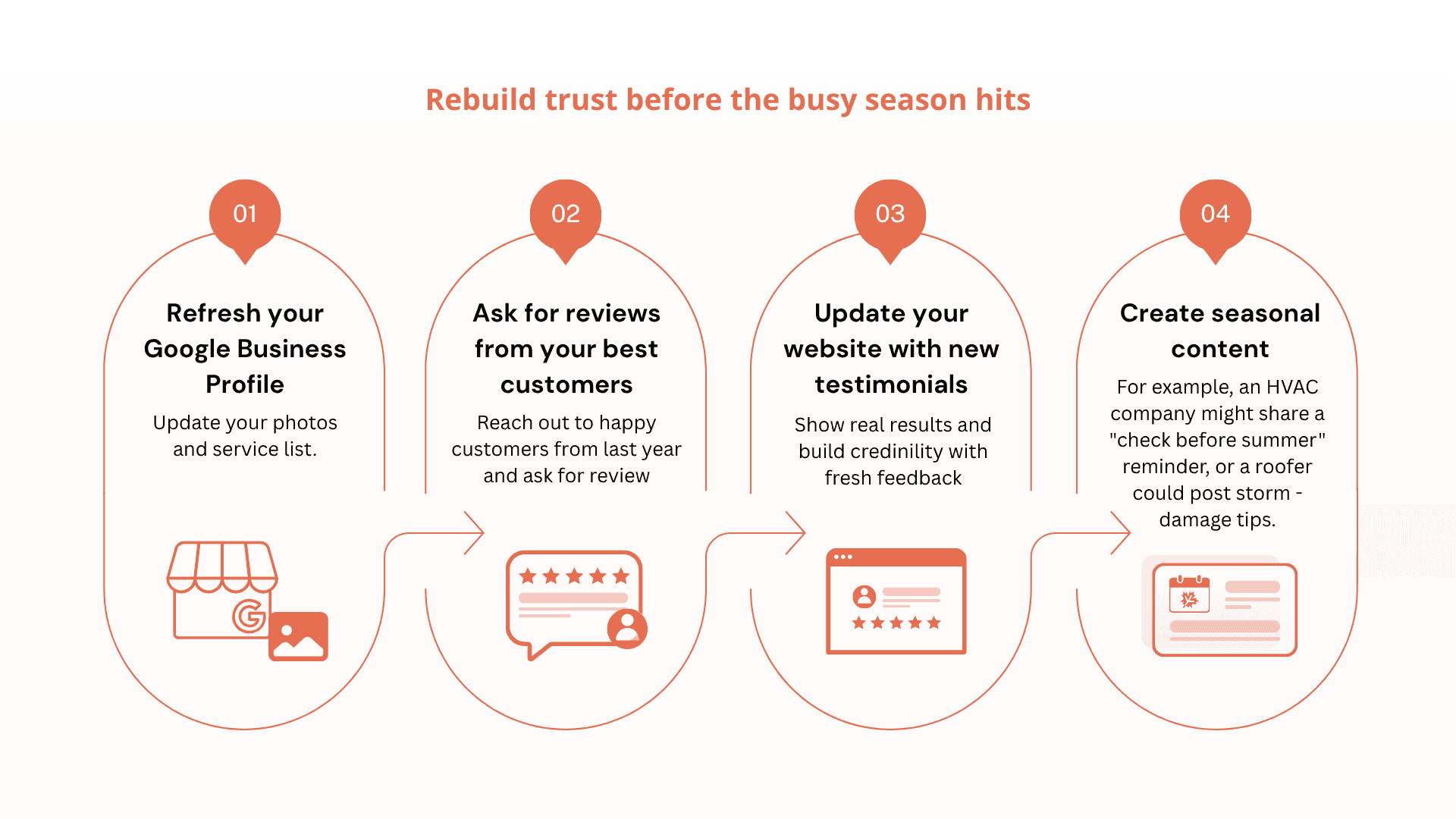
Q1: Rebuild Trust Before the Busy Season Hits
Early in the year, most home service businesses are quieter, which makes it the right time to do the marketing work that doesn't pay off immediately. Refresh your Google Business Profile photos and service list.
Ask your best customers from last year for a review. Update your website with new testimonials. For an HVAC company, this might mean a "get your system checked before summer" push; for a roofer, it's storm-damage education content. None of this drives calls today, but it's exactly what shows up when demand picks up and someone starts comparing you to three competitors.
Q2–Q3: Capture Demand While It's Hot (Literally)
Once your season ramps up, the job shifts from building trust to being unmissable at the moment someone searches, and the swings are bigger than most owners plan for. Seasonal search trend data across home service trades shows HVAC search demand can swing 250–600% between peak and valley months, plumbing searches jump roughly 36% in mid-summer, and roofing searches spike 69–70% in the weeks after major storms.
The same research found 98% of consumers now research a home service business online before hiring one, and 97% say response speed directly influences who they choose. This is when local ads, review response speed, and fast follow-up on inbound leads matter most. Demand is already there; the only question is whether it finds you or a competitor first.
It's also the worst time to experiment with new messaging; lean on the trust you built in Q1 instead of trying to prove yourself mid-rush. If you're running paid campaigns during this window, geotargeting your Facebook ads to your actual service area helps stretch that budget further during the highest-competition weeks.

Q4: Fill the Gaps Before the Slow Season
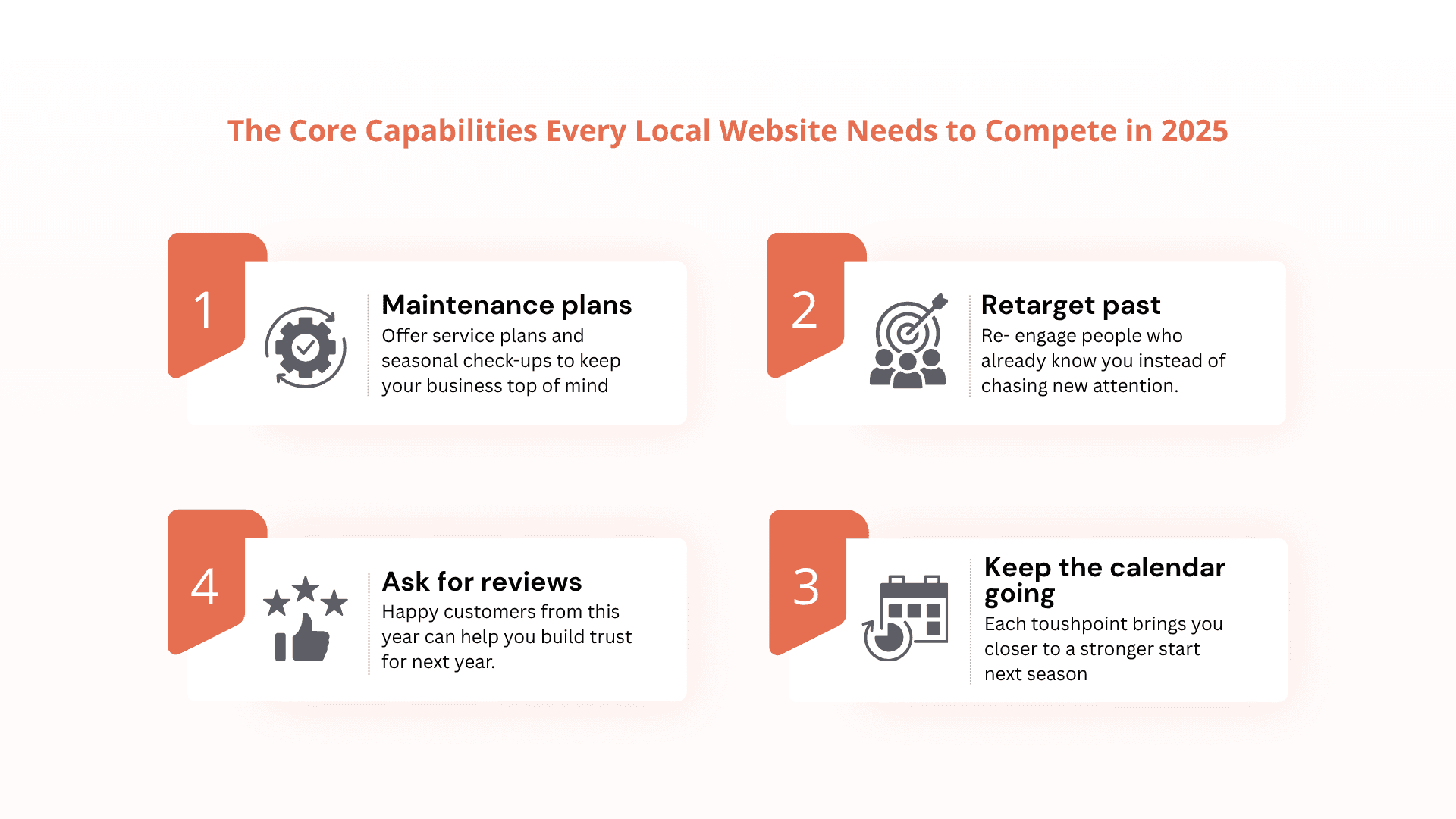
As things cool off, the calendar shifts again, toward the offers and reminders that fill gaps rather than chase peak demand: maintenance plans, seasonal check-ups, referral pushes to past customers who haven't heard from you in months.
Retargeting past visitors and past customers tends to perform well in this window, since you're re-engaging people who already know you rather than competing for new attention. This is also the best window to ask happy customers for reviews you'll use to rebuild trust next Q1, which is how the calendar starts feeding itself.
How to Build Yours in Under an Hour
You don't need a marketing agency or a project management tool to start. Take a single sheet (physical or digital) and mark your slow season, your peak season, and your shoulder season based on last year's booking patterns. Under each, write one or two things worth doing: a review push, a seasonal promo, a maintenance reminder. That's the whole calendar. The value isn't in the sophistication; it's in not having to make this decision from scratch every single month for the rest of the year.

Build the Calendar Once, Reuse It Every Year
The specific months will shift depending on your trade and your region, but the shape doesn't: quiet season for trust-building, peak season for visibility and speed, shoulder season for retention. Once you've mapped that out for your business, you're no longer starting from a blank page every month. You're just running the plan.
Marketing doesn't have to be a new decision every week. It just has to follow the same rhythm your business already runs on.
If you'd rather not build and run this calendar solo, OneLocal's LocalPresence tool helps you stay visible and consistent online year-round, and LocalAds makes it easy to ramp spend up during your peak months and pull back during the quiet ones, so the quiet-season groundwork actually shows up when demand picks up.

Related Article
Related Article