How to Turn Every Review Into a Marketing Asset (Not Just a Star Rating)
Share on:


A homeowner leaves you a five-star review after a same-day repair. You say thanks, maybe tap out a quick reply, and move on to the next job. That review starts earning trust the moment someone searches "plumbers near me" and lands on your Google Business Profile, comparing you against two or three other names.
But that's just the first stop in their decision, not the last. From there, they'll likely click through to your website, maybe check your Facebook page, maybe compare the estimate you send against someone else's.
If the trust that review built on Google doesn't show up again anywhere else in your online presence, you're asking them to take your word for it a second and third time instead of reinforcing what they already believed.
Most local service businesses treat reviews as a scoreboard, a number to keep above 4.5 stars. The businesses growing fastest treat every review as trust-building material that should follow a buyer through their entire decision, not just the first place they happen to see it.
Your Reviews Are Already Written: You're Just Not Using Them
Think about how much you'd pay a copywriter to produce a paragraph that says, in a real customer's own words, exactly why someone should trust you with their home. That's what a good review already is. It just needs to work harder for you.
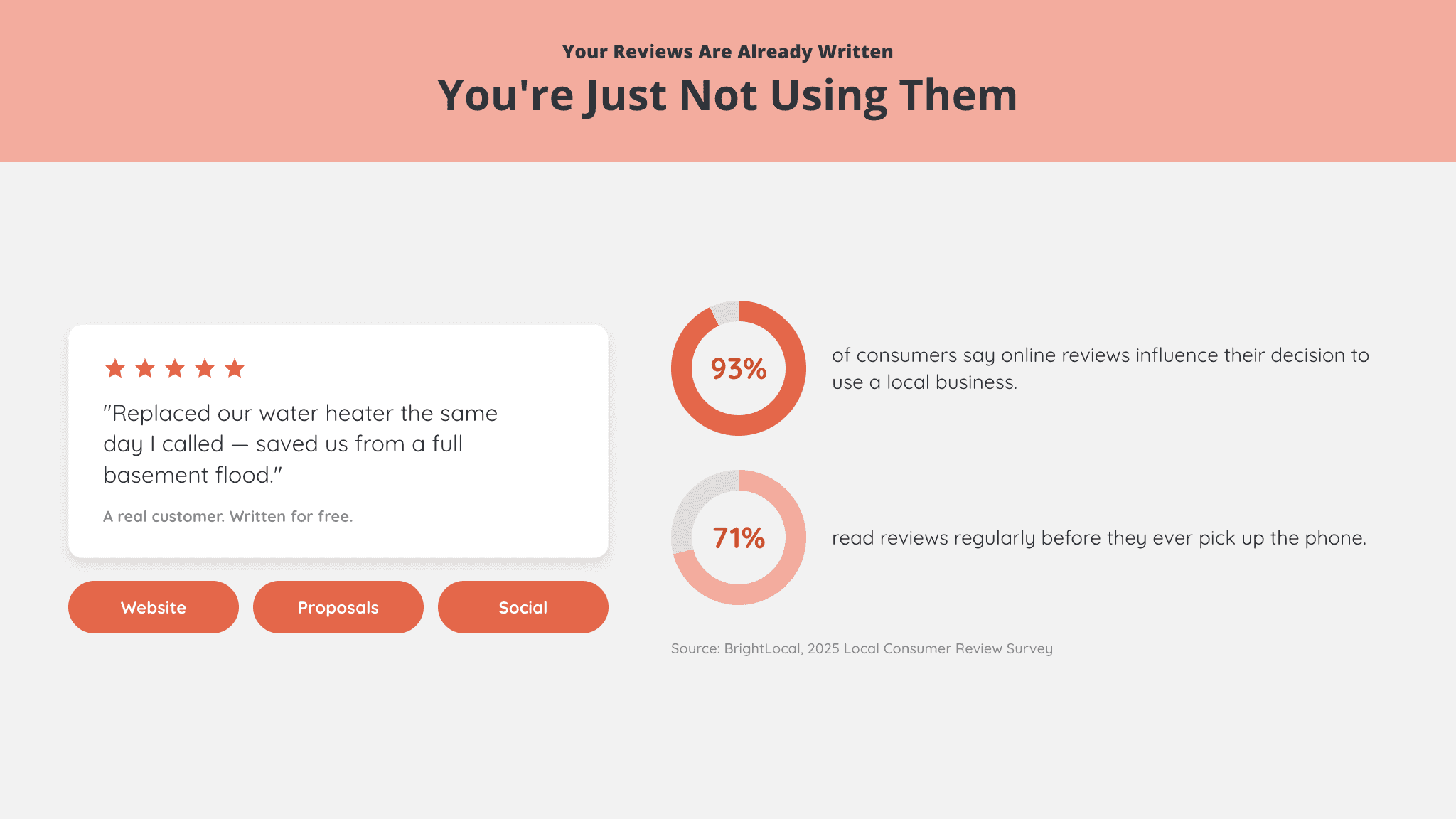
According to BrightLocal's 2025 Local Consumer Review Survey, 93% of consumers say online reviews influence their decision to use a local business, and 71% read reviews regularly before making that call.
That means the review sitting unused on your profile is already doing the persuading; it's just not reaching anyone. Before you do anything else, start pulling your best reviews (the specific, detailed ones, not the "great service!" one-liners) into a running list you can pull from for your website, proposals, and social posts.
Not All Reviews Deserve the Same Treatment
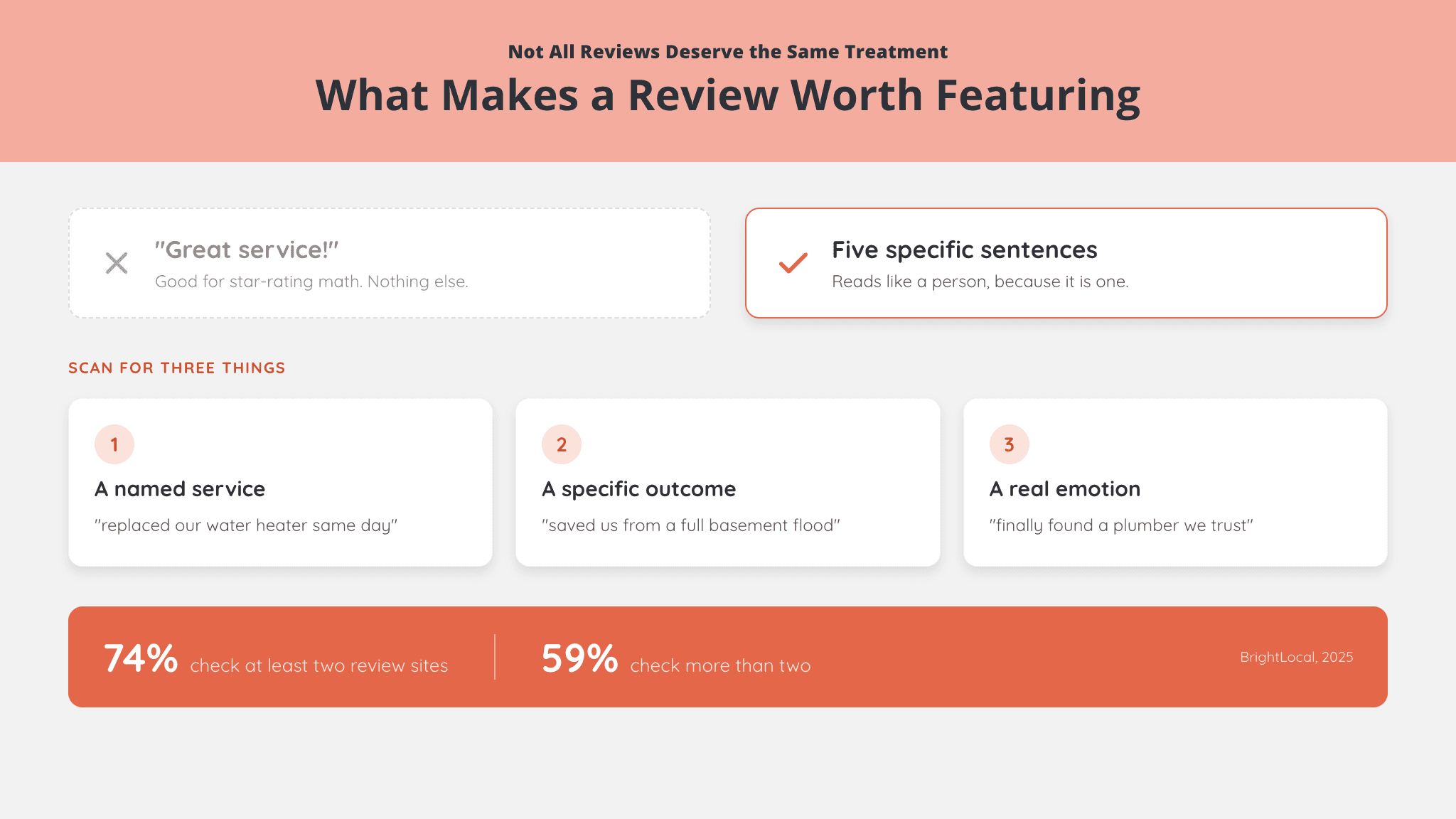
A five-word review and a five-sentence review are not the same asset. The short ones are useful for star-rating math; the long, specific ones are the ones worth featuring.
When you're scanning for reviews to reuse, look for three things: a named service ("replaced our water heater same day"), a specific outcome ("saved us from a full basement flood"), and something close to a real emotion ("finally found a plumber we trust").
Reviews with all three do more work than a dozen generic five-star ratings, because they read like something a real person said, because they are. BrightLocal’s survey found 74% of consumers check at least two review sites before deciding, and 59% check more than two.
The same handful of strong reviews need to hold up across your Google profile, your website, and wherever else a prospect looks. If you're seeing your Google reviews drop off unexpectedly, our guide on why Google reviews stop showing up walks through the most common causes.
Respond Like Someone's Watching, Because They Are
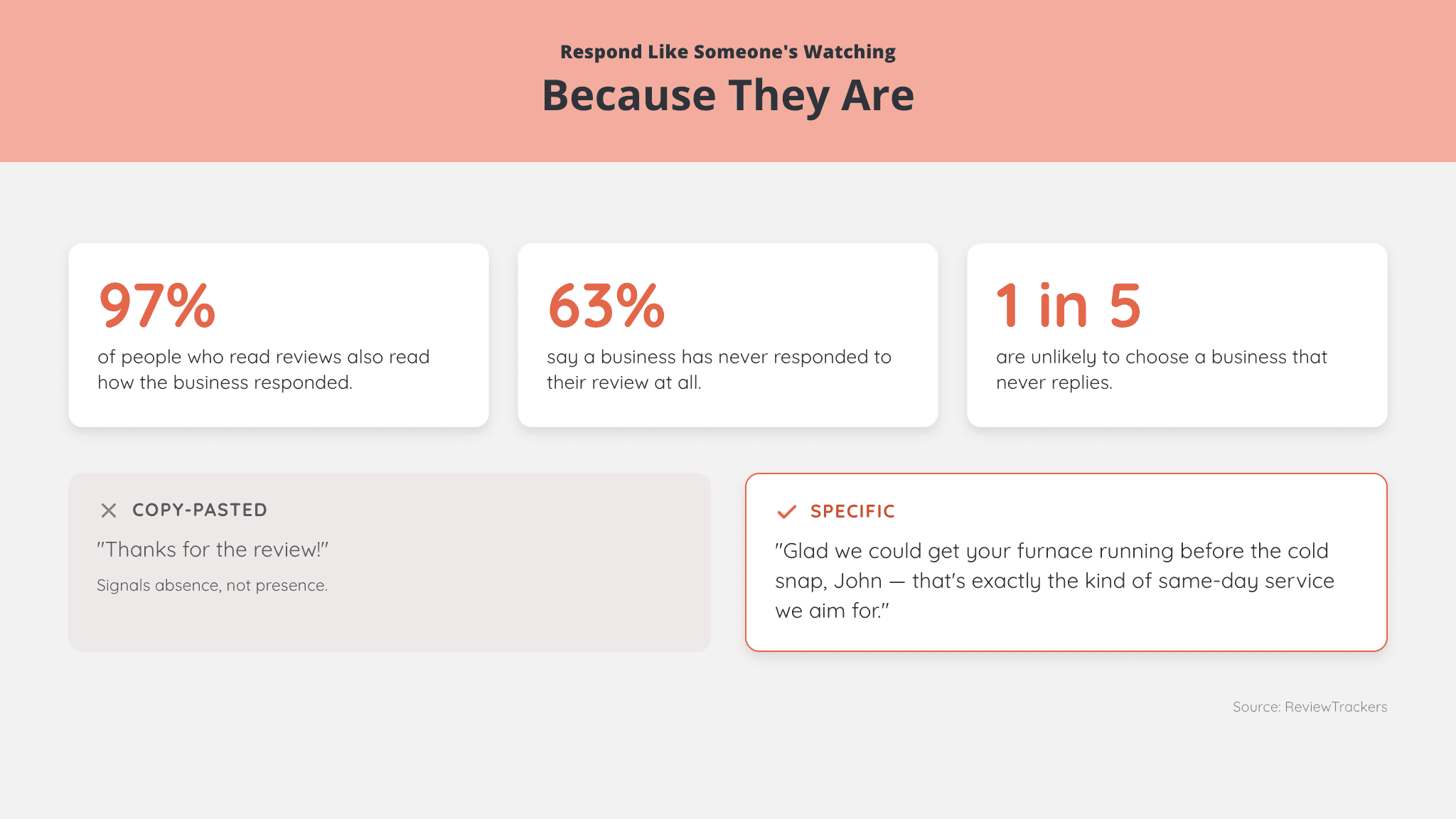
Your reply to a review isn't for the person who left it. It's for the hundred people who read it before deciding whether to call you. That's not a guess. ReviewTrackers' customer review research found 97% of people who read reviews also read how businesses respond to them, yet 63% say a business has never responded to their review at all.
A thoughtful, specific response ("Glad we could get your furnace running before the cold snap, John, that's exactly the kind of same-day service we aim for") does more to build trust than the review itself. It shows you're present, professional, and proud of the work. Skipping replies, or using the same copy-pasted line every time, quietly signals the opposite, and roughly a fifth of consumers say they're unlikely to choose a business that never responds to reviews at all.
This matters even more for the occasional negative review: a calm, specific, non-defensive response often reassures a future customer more than a page full of five-star ratings with no replies.
Our guide on how to respond to positive reviews has example language you can adapt, and if you'd rather not track replies manually across every platform, LocalResponse centralizes review responses so nothing sits unanswered for days.
Turn Your Best Reviews Into Your Best Marketing Copy
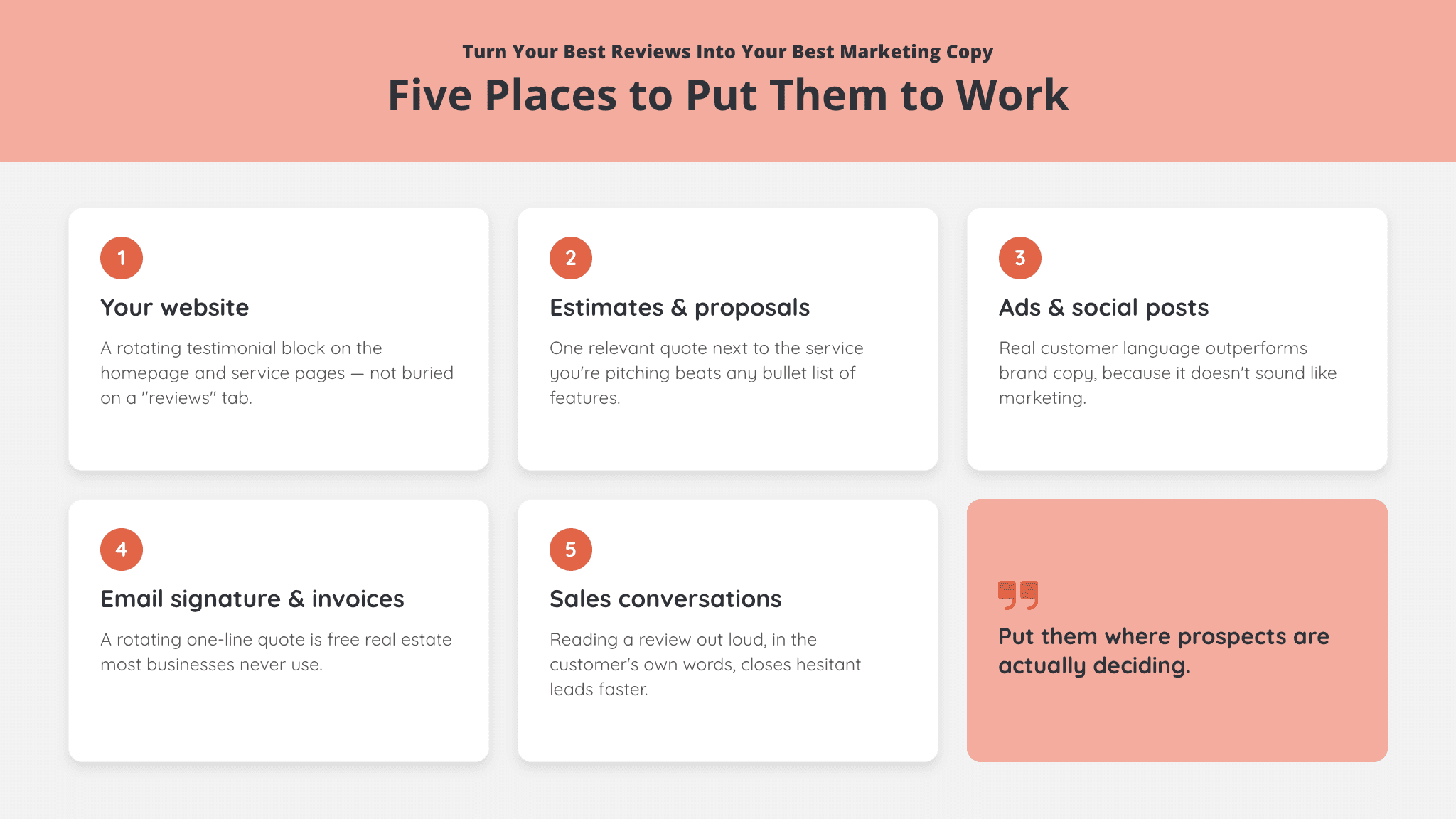
Once you've got a shortlist of strong reviews, put them to work in the places prospects are actually deciding:
Your website: a rotating testimonial block on your homepage and service pages, not buried on a separate "reviews" tab.
Your estimates and proposals: a single relevant quote next to the service you're pitching does more than any bullet list of features.
Your ads and social posts: real customer language consistently outperforms brand copy, because it doesn't sound like marketing.
Your email signature or invoices: a rotating one-line quote is free real estate most businesses never use.
Sales conversations: reading a relevant review out loud on a phone call, in the customer's own words, often closes hesitant leads faster than another feature explanation.
What This Looks Like in Practice
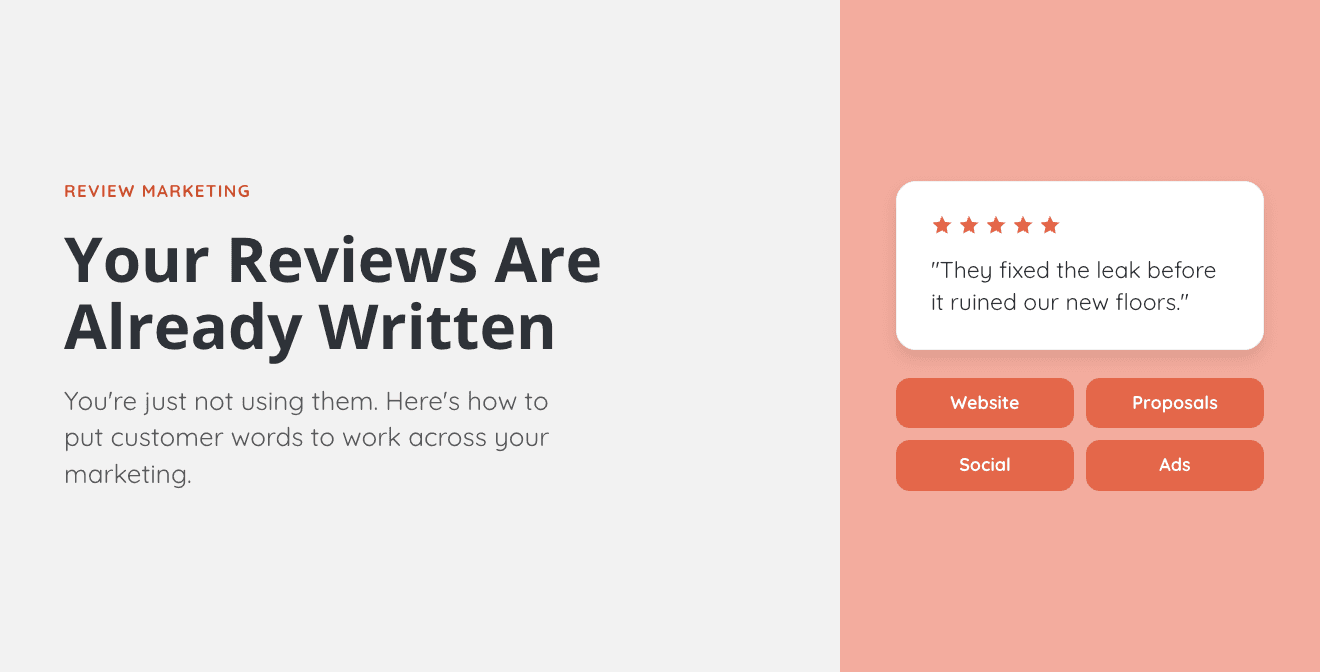
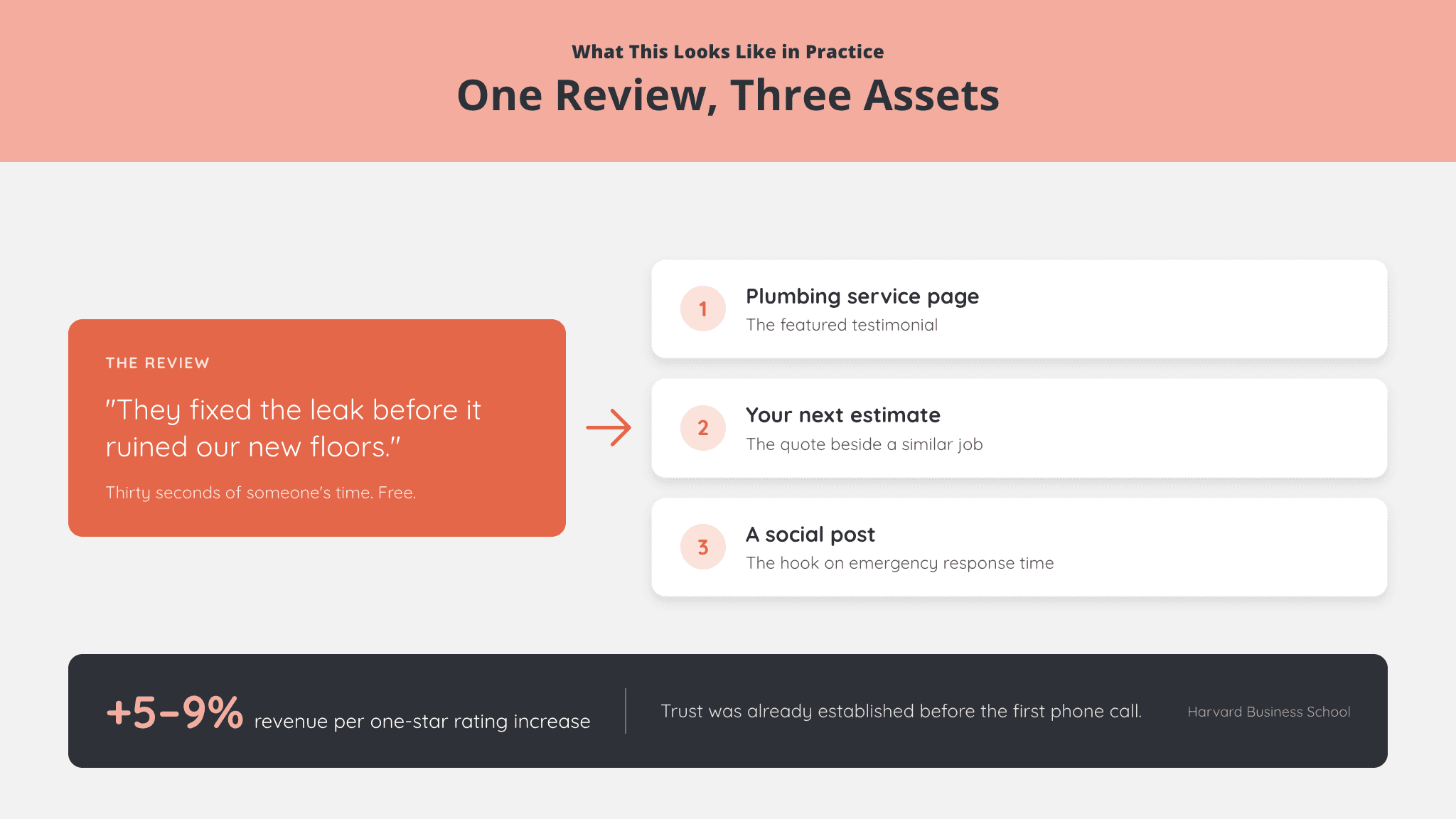
Say a customer leaves a review mentioning your team fixed a leak "before it ruined our new floors." That single line can become the testimonial on your plumbing service page, the quote in your next estimate for a similar job, and the hook for a social post about emergency response time, all from one thirty-second review someone left for free.
A Harvard Business School study of Seattle restaurants found that each one-star increase in a business's average rating drove a 5 to 9 percent increase in revenue, largely because trust was already established before the first phone call. Multiply a handful of strong reviews a month by that effect, and you've got a rotating library of marketing content that costs nothing to produce and sounds nothing like marketing.
Make Review Collection Part of the Job, Not an Afterthought
The businesses with the strongest review libraries didn't get there by luck. They built asking for a review into the job itself. That might mean a text sent the moment a technician marks a job complete, or a QR code left on the invoice.
The goal isn't just more reviews; it's a steady stream of fresh, specific feedback you can keep pulling from, instead of leaning on the same three quotes from two years ago. And since consistent review activity is also one of the signals Google weighs in local pack rankings, a steady collection habit pays off in visibility, not just marketing copy.
Put Your Reviews Where the Decision Actually Happens
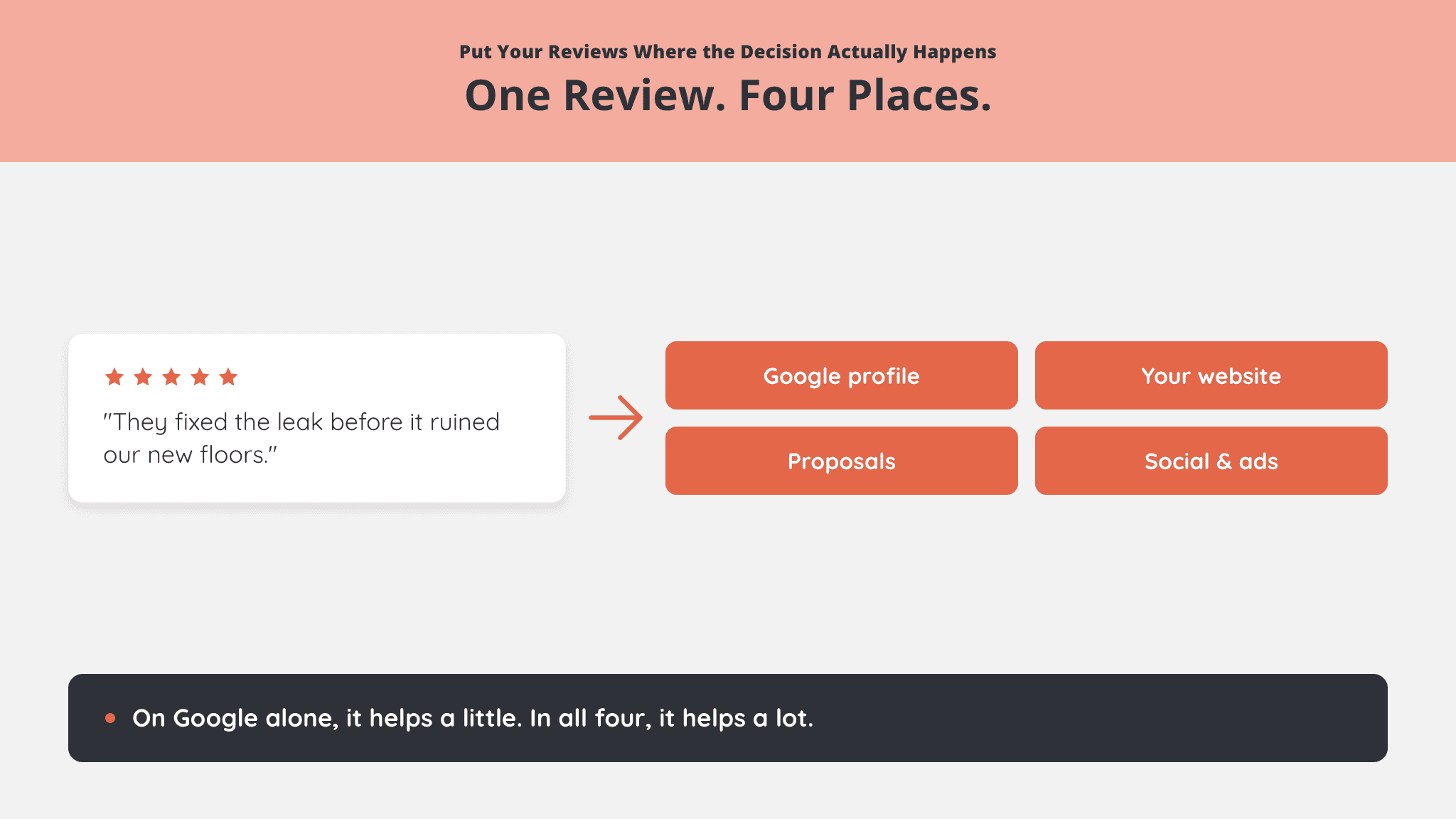
The biggest mistake isn't collecting too few reviews. It's collecting them and leaving them stranded on one platform. A five-star review that only lives on Google helps you a little. The same review, syndicated to your website, dropped into a proposal, and reused in a social post, helps you a lot. Reputation only compounds if you let it move.
Reviews are one of the few marketing assets your customers write for you, for free, in language your prospects trust more than anything you'd write yourself. The only question is whether you're putting them to work, or letting them sit there collecting stars.
OneLocal's LocalReviews tool makes it easy to collect fresh reviews automatically and put your best ones to work across your site and marketing, without adding another task to your team's plate.

Related Article
Related Article